
Djanet Travel Guide: Gateway to the Tassili n'Ajjer
The complete guide to Djanet — how to get there, when to go, what to see (Tassili rock art, Tadrart, Tin Merzouga, Erg Admer), Tuareg culture, Sebeïba and how to plan your trip.
Discover the Tassili n'Ajjer — a UNESCO-listed plateau with more than 15,000 prehistoric paintings and engravings recording a green Sahara. History, periods, key sites and how to visit.
Imagine walking through a maze of sandstone towers, turning a corner and finding a giraffe painted on the rock — by someone who lived when this desert was a savannah. That is the Tassili n'Ajjer, often described as the largest open-air art gallery on Earth.
This guide explains what the Tassili is, why its art matters, how archaeologists read it, which sites to see and how to visit responsibly.
The name comes from Tamahaq, the language of the Tuareg: tassili means plateau, and the Ajjer are the Tuareg confederation of the region. The plateau rises above the oasis town of Djanet and extends for hundreds of kilometres along the border region of south-east Algeria.
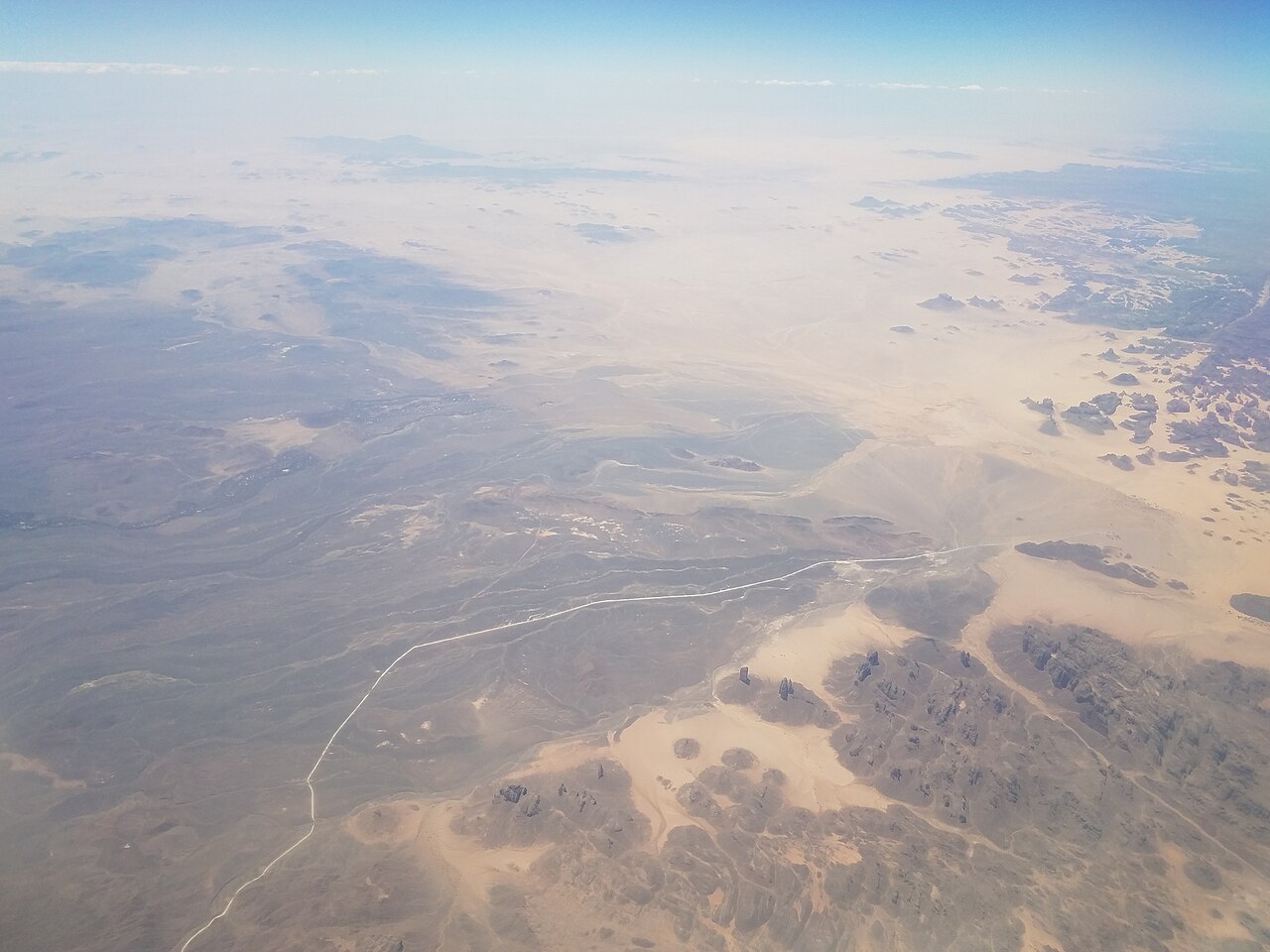
Over millions of years, wind and water have carved the sandstone into canyons, arches, pillars and labyrinths. Seen from above, parts of the plateau look like a ruined city; on the ground, guides call them "forests of stone".
The Tassili n'Ajjer was inscribed as a UNESCO World Heritage Site in 1982, recognised for both its cultural value (the rock art) and its natural value (its geology and relict ecosystems). It is also a national park and biosphere reserve covering more than 70,000 km².
To understand the art, you have to imagine a very different Sahara. During the African Humid Period, roughly 11,000 to 5,000 years ago, the region received far more rain. There were lakes, rivers and grasslands, home to elephants, giraffes, rhinos, hippos and crocodiles — and to people who hunted, gathered and later herded cattle.
As the climate dried, people moved, adapted and changed their way of life. The rock art records that story in pictures.
The Tassili holds more than 15,000 paintings and engravings, made over thousands of years. Together they form a visual diary of:
Few places on Earth let you see such a long sweep of human history in one landscape.
Archaeologists group the art into broad periods based on style and subject. Exact dates are debated, and periods overlap, but the sequence is widely used:
| Period | Approximate character | What you see |
|---|---|---|
| Large wild fauna (Bubaline) | Oldest engravings | Large engraved elephants, rhinos, giraffes and an extinct giant buffalo |
| Round Heads | Early painted period | Floating human figures with round, featureless heads, masks and ritual scenes |
| Pastoral (Bovidian) | Cattle herding era | Herds of cattle, family camps, daily life, often in fine detail |
| Horse (Caballine) | Arrival of horses | Horses, "flying gallop" chariots, warriors with spears and shields |
| Camel (Cameline) | Most recent | Camels, riders and inscriptions in early Tifinagh script |
The oldest works are many thousands of years old — far older than the pyramids of Giza.
The Round Head paintings are among the most debated prehistoric images anywhere. Huge, floating figures with circular heads, sometimes surrounded by smaller figures, have inspired theories ranging from shamanic visions to ritual masks. Archaeologists see them as evidence of complex beliefs and ceremonies among early Saharan communities.
A "city" of rock shelters, alleyways and natural rooms on the high plateau. Sefar is home to some of the most famous Round Head paintings, including the towering figure often called the Great God of Sefar, as well as remarkable pastoral scenes.
Its name means "the giants", after its large painted human figures. Jabbaren contains a dense concentration of paintings from several periods.
Near Tamrit, ancient Saharan cypress trees (tarout) still grow — living relics of a wetter past. Some individuals are believed to be thousands of years old.
Further plateau sites with outstanding paintings from different periods, reached on longer treks.
Close to Djanet, accessible without trekking. These finely engraved cattle with "tears" are one of the most beloved images of Saharan rock art.
Reached by 4x4, the Tadrart combines dramatic landscapes with engravings and paintings, and leads to the orange dunes of Tin Merzouga.
Sleep under some of the darkest skies on Earth, walk through the world's largest open-air gallery of prehistoric art and reset with sunrise coaching on the dunes.
| High plateau trek | 4x4 and short walks | |
|---|---|---|
| Sites | Sefar, Jabbaren, Tamrit and more | Crying Cows, Tadrart sites, lower areas |
| Access | Steep climb (around a few hours) with donkeys carrying gear | Vehicle tracks and walks |
| Duration | Usually 5+ days on the plateau | Day trips or a few days |
| Fitness | Good fitness needed | Easy to moderate |
| Best for | Rock art enthusiasts, hikers | Most travellers, retreats, mixed groups |
Our Tassili Stars Retreat uses 4x4 access so there's time and energy for coaching and reflection. Plateau treks can be arranged as bespoke trips.
Visits must be made with a licensed agency and local guide. Best season: October to April.
The paintings have survived thousands of years; a careless moment can damage them forever.
The Tassili isn't just a museum. Tuareg families still graze goats and camels in its valleys, gueltas hold water year-round, and rare wildlife — including Barbary sheep (mouflon), desert foxes and many bird species — survives in its canyons. The relict cypress trees are among the most remarkable plants in the Sahara.
Standing in front of an image painted by someone who lived thousands of years ago does something to your sense of time. Problems that felt enormous at home look smaller. Psychologists call this feeling awe, and research suggests it can reduce rumination and increase a sense of connection. We explore it in the psychology of awe, and we design our desert retreats around these moments.
The oldest engravings are many thousands of years old; the most recent works date to the last two millennia. Precise dates are still debated by researchers.
Yes, it was inscribed on the UNESCO World Heritage List in 1982 for both cultural and natural values.
Yes. Sites such as the Crying Cows and many in the Tadrart are accessible by vehicle and short walks.
Fly from Algiers to Djanet, then travel with a licensed agency by 4x4 or on foot.
Elephants, giraffes, rhinos, hippos, antelopes, cattle, horses, camels, dogs and many others.
"Plateau of the Ajjer", referring to the Kel Ajjer Tuareg confederation.
Real short videos by independent creators on YouTube and TikTok. See all 121 Algeria videos →

I founded Ziri Travels after one trip to Algeria changed everything for me. My team and I plan and run every Ziri trip, from Djanet to the Mediterranean. Read my story. Questions about this guide? Message us on WhatsApp.
The complete guide to Djanet — how to get there, when to go, what to see (Tassili rock art, Tadrart, Tin Merzouga, Erg Admer), Tuareg culture, Sebeïba and how to plan your trip.

The best things to do in Ghardaïa — climb the ksar to the Grand Mosque, shop the market square, visit Beni Isguen and its auction market, El Atteuf, Melika, the palm groves, carpets and more.

The best things to do in Algiers — the Casbah, Notre-Dame d'Afrique, Djamaa el Djazaïr, the Jardin d'Essai, the Bardo museum, the corniche, street food, hammams and day trips to Tipaza.
Pick the people, dates, places and experiences, see a price estimate as you go, and get a tailored proposal within 48 hours.